TYPES OF BREAST CANCER
Growing To Give
Understanding the main types of breast cancer, potential causes, and available treatment approaches can help patients and caregivers make informed decisions and feel more confident during the care journey.
TYPES OF BREAST CANCER
Growing To Give
Understanding the main types of breast cancer, potential causes, and available treatment approaches can help patients and caregivers make informed decisions and feel more confident during the care journey.
ON THIS PAGE
Breast cancer is one of the most common cancers among women worldwide, and it can also affect men. Advances in screening, genetics, and treatment have made early detection and personalized care more effective than ever. Understanding the main types, potential causes, and available treatment approaches can help patients and caregivers make informed decisions and feel more confident during the care journey.
Growing to Give does not provide medical advice, diagnosis, or treatment. The information and personal stories shared on this site are for informational and community support purposes only. Always seek the guidance of your doctor or other qualified healthcare professional with any questions you may have regarding your health, medical condition, or treatment options.
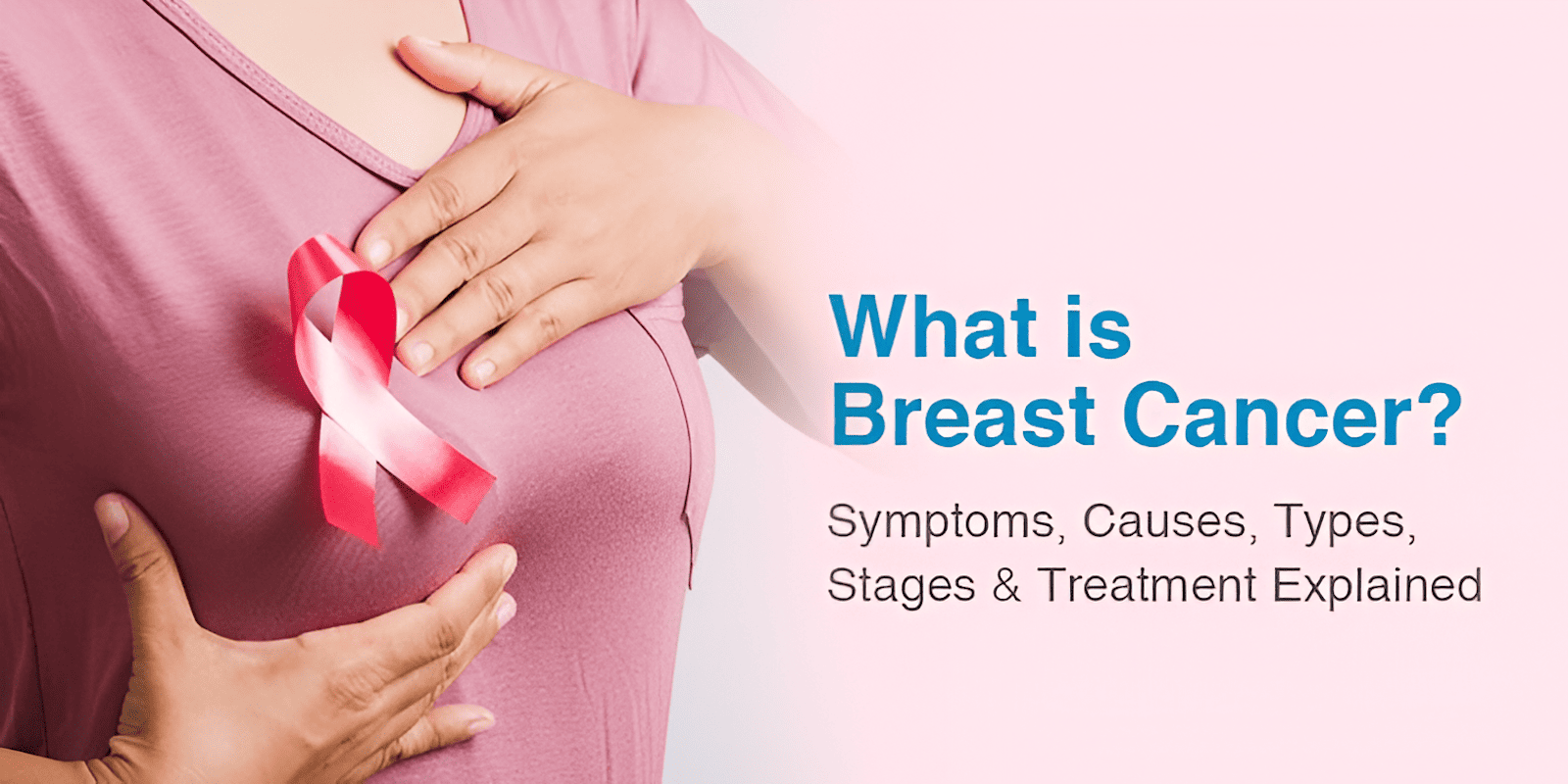
Breast cancer develops when cells in the breast grow uncontrollably, forming a tumor that may invade nearby tissue or spread to other parts of the body. There is no single cause, but several factors can increase risk:
• Inherited gene changes (including well-known susceptibility genes) account for a portion of cases.
• A family history of breast or ovarian cancer can raise personal risk.
• Early menstruation (before ~12) or later menopause (after ~55).
• Long-term use of certain hormone therapies.
• Never having been pregnant, or first pregnancy after ~30.
• Limited physical activity and obesity, particularly after menopause.
• Excessive alcohol intake.
• Prior radiation exposure or contact with endocrine-disrupting chemicals.
• Diet high in saturated fats and low in fruits and vegetables.
• Risk increases with age, and women are more frequently affected than men.
Breast cancers are classified by where they begin and whether they remain localized or have spread.
A non-invasive cancer that starts in the milk ducts. It has not spread beyond the duct walls and is highly treatable when detected early.
The most common type begins in the ducts and invades surrounding breast tissue. Without treatment, it can spread to lymph nodes or distant organs.
Starts in the milk-producing lobules and spreads to nearby tissues. ILC can be harder to detect on mammogram and may require ultrasound or MRI.
Lacks estrogen, progesterone, and HER2 receptors. It tends to be more aggressive but can respond well to chemotherapy and, for some cases, immunotherapy-based approaches.
Characterized by extra HER2 signaling that promotes cell growth. Targeted therapies that block HER2 pathways have significantly improved outcomes for many people with this subtype.
Fueled by estrogen and/or progesterone. Endocrine therapy—including receptor-blocking medicines or aromatase-inhibiting tablets—can slow or stop tumor growth by reducing hormone signals.
A rare, aggressive form that causes redness, swelling, and warmth due to blocked lymph vessels in the skin. Care generally involves a combination of systemic therapy, surgery, and radiation.
Cancer that has spread to other organs such as bone, lung, liver, or brain. While not curable, modern treatments can often control disease, relieve symptoms, and extend life.
Treatment depends on type, stage, receptor status, genetics, and overall health. Plans are personalized and often combine several approaches.
• Lumpectomy: Removes the tumor with a margin of healthy tissue.
• Mastectomy: Removes part or all of the breast tissue, sometimes with lymph nodes..
• Reconstructive options may be discussed for physical and emotional recovery..
Targets remaining cancer cells after surgery to reduce recurrence risk; also used for symptom control in some advanced cases.
Uses medicines that target rapidly dividing cells. It may be given before surgery (neoadjuvant) to shrink tumors or after surgery (adjuvant) to lower recurrence risk.
For HR+ cancers, therapy reduces estrogen signaling or blocks estrogen receptors to slow or stop growth.
For appropriate subtypes, targeted medicines act on specific pathways—such as HER2 signaling or cell-cycle regulation—to inhibit cancer growth with greater precision.
In select cases—often certain triple-negative tumors—immune-checkpoint therapies may help the immune system recognize and attack cancer cells.
Healing from breast cancer is more than medical—it’s emotional, nutritional, and spiritual. Lifestyle changes such as balanced nutrition, gentle exercise, mindfulness, and joining support communities like Growing To Give’s Cancer Support Programs can help survivors rebuild strength and hope.
Early detection through mammograms, ultrasounds, and self-exams remains the most powerful defense. Awareness saves lives—and every shared story inspires courage.
Names/emails collected here are for nonprofit updates only and are not used for ads or linked to health status


.png)
.png)
.png)

.png)
Copyright Ⓡ 2026. All Rights Reserved. Growing To Give